

Today marks the 80th anniversary of Victory in Europe Day and the day peace returned to our shores. All throughout Scotland celebrations ensued, and with time, Shinty returned to the Glens of Scotland.
However, with this celebration, there was also heavy reflection as many Shinty areas saw their communities decimated, just as they had seen decades earlier. As young, fit and healthy men, many Shinty players joined the fight in their droves, and ultimately paid the ultimate price to rid Europe of evil.
In the midst of VE day, the memory of great teams, such as the Kingussie team of the 1920’s, spurred Shinty teams across the land to rebuild to their pre-war strength. Newtonmore, who had lost 6 players in WW1 saw 13 of their players not return from the war. However, they were undeterred from this and went on to lift 4 of the 5 Camanachd Cup Trophies after the war, with only a 1-0 defeat by Oban Celtic stopping five on a row. Part of this team was Sandy Russell, who after spending a large chunk of the war in POW camps was part of this winning team before giving another 50 years of service to his local community until his death in 2000.
The impact of the war is still visible today – the Shinty Pavilion located at the Highland Folk Museum still has large shrapnel dents from a German air raid on the British Aluminium Co Works in Boleskine, Foyers.
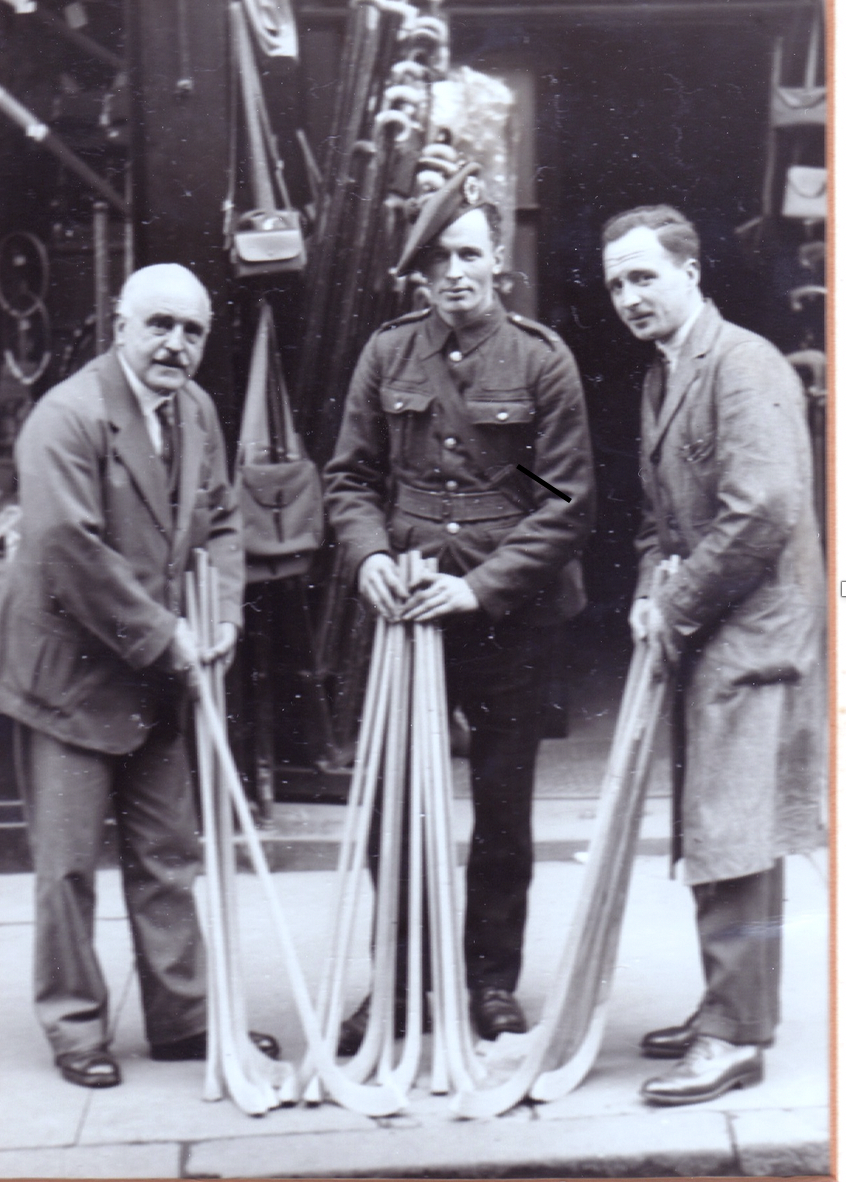
Men on the front line used Shinty as a means to connect with their life back home, with John Macpherson of Inverness Shinty Club securing a number of Camans to play matches as can be seen below.
The playing of Shinty has only been halted 3 times – the most recent due to the Covid pandemic – but, just as in 1918 and 1945, the power of community has shone through every time, as towns and villages have battled through to rebuild the game.